Nazaré’s Giant Waves
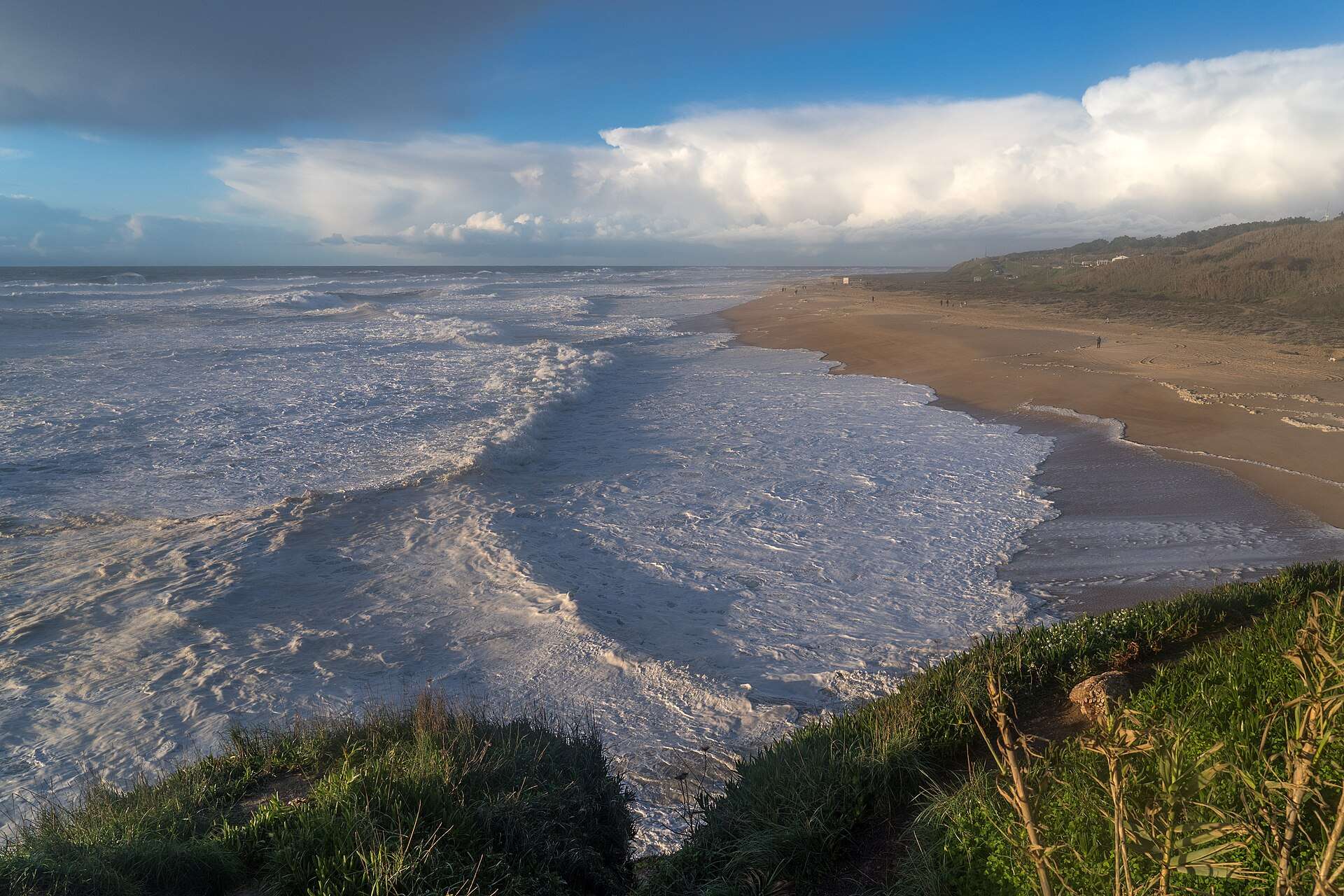
Two hours north, one town runs two seasons: a calm fishing beach all summer, and — October through March — the biggest surfable waves on earth, made by an underwater canyon and watched from a cliff, never the sand.
The short version
- Buses run Lisbon to Nazaré in just under two hours at modest fares — rede-expressos.pt — the practical route, since the town sits off the rail map.
- The physics is the headline: the Nazaré Canyon — a submarine gorge reaching some five kilometers deep — runs almost to the shore and focuses Atlantic swell onto Praia do Norte, stacking winter waves into the tallest ever surfed.
- The records live in the high-twenty-meters range — tow-in rides certified at and beyond the 26-meter mark — with the record boards and exhibits at the lighthouse fort keeping the tally the alarm promised.
- The Forte de São Miguel Arcanjo on the Sítio headland is the viewing institution: a small entry fee, the lighthouse, the surf exhibits, and the cliff-edge angle over Praia do Norte where the big-day crowds gather behind the safety lines.
- The safety register is the alarm’s, stated plainly: big-swell days close the North Beach sand, the waves and surge have killed on this coast, and the cliff — not the beach — is where every sensible spectator stands.
- The funicular (running since the 1880s) links beach town to Sítio’s headland per the alarm’s either-way clause; the summer product is the calm crescent beach, the dried-fish racks (peixe seco) on the sand, and the traje — the local seven-skirts dress tradition — worn by some older women as living custom, noted with respect.

Getting there
The bus is the route and the season is the decision, per the alarm’s two-towns framing: winter trips answer to the swell forecast (the giant days are forecastable several days out, and the town fills for them), while summer trips need nothing but sunscreen. The funicular shuttles constantly between the beach town and Sítio; big-day crowds queue it, and the cobbled path up covers the same climb for the impatient. Day-trip timing holds comfortably in both seasons — the last buses run early-evening-ish and the station sits central.
The day
Winter version: funicular up first, fort ticket paid, and the cliff position claimed — the canyon’s work arriving as moving ranges of water that break scale entirely, jet skis threading the faces when the tow teams are running, and the crowd’s collective gasp as the sets stack. The record boards inside recalibrate per the alarm; the lighthouse platform frames the classic shot. Lunch in Sítio or down in town runs caldeirada and grilled fish. The afternoon walks the headland’s other viewpoints and descends to the (closed, churning) North Beach overlooks from safe elevation — the closures respected absolutely, per the register. Summer version: the crescent beach’s calm morning, the fish racks photographed with their tenders’ tolerance, the funicular’s ride for the view alone, and the fort visited for the story of what this same water becomes — the two-products truth of the alarm standing right there in the flat blue evidence. Both versions end with the bus south against the coast’s light.
When to go
October through March is wave season, with the true giants arriving on specific forecast swells a handful of times each winter — flexible travelers watch the surf forecasts and strike; fixed-date travelers still get serious ocean most winter weeks. November traditionally opens the marquee window. June through September runs the beach-town product at full family calm. The shoulder months split honestly: the canyon doesn’t sleep entirely, and spring or autumn days can surprise in either direction — the fort and funicular carry the visit regardless.
Frequently Asked Questions
Will I definitely see giant waves in winter?
No — the true giants need specific swell events, and the honest structure is forecast-watching: a handful of marquee days per winter, well-predicted several days out. Ordinary winter weeks still deliver genuinely huge, cliff-worthy ocean. Fixed dates buy good odds of impressive; flexibility buys the historic days.
Why exactly are the waves so big here?
The canyon — a submarine gorge plunging thousands of meters — runs nearly to the headland and funnels open-Atlantic swell energy into a small zone off Praia do Norte, where it meets shallower water and stacks. It’s a unique bathymetric accident, which is why the records live here and not on some other exposed coast.
Is watching actually dangerous?
From the fort and marked clifftop positions, no — that’s the entire point of the alarm’s cliff-not-sand rule. The danger zone is the beach and lower rocks, where surge on big days reaches far beyond intuition and has swept people away. Respect the closures and the barriers and the spectacle is safely yours.
What’s the story with the seven skirts?
A fishing-village dress tradition — layered skirts worn by the community’s women, explained by charming folk theories (waves, days, virtues) that vary by teller. Some older women still wear the traje daily as custom, not costume; photograph with courtesy and buy the explanation you like best from the town’s own tellers.
Nazaré or Sintra from Lisbon?
Sintra (documented on this network with its palace-window rules) for palaces and forest; Nazaré for ocean physics and a working beach town. In winter, on a big forecast, Nazaré becomes the region’s singular event and outranks everything — the rest of the year, Sintra keeps its crown and Nazaré keeps its calm.