Évora in a Day
Out in the Alentejo’s cork country, a UNESCO city keeps a Roman temple in its square and a chapel walled with bones behind its church. The bus is faster than the train, and summer afternoons are not your friend.
The short version
- Rede Expressos coaches run Lisbon’s Sete Rios to Évora in about 90 minutes at high frequency and low fares — book both legs at rede-expressos.pt; the CP train from Oriente exists but runs slower and rarer, details at cp.pt.
- The Capela dos Ossos, behind São Francisco church, is walled and columned with the bones of some five thousand people, arranged by 16th-century monks as a meditation — the door’s inscription translates as ‘We bones that are here await yours.’
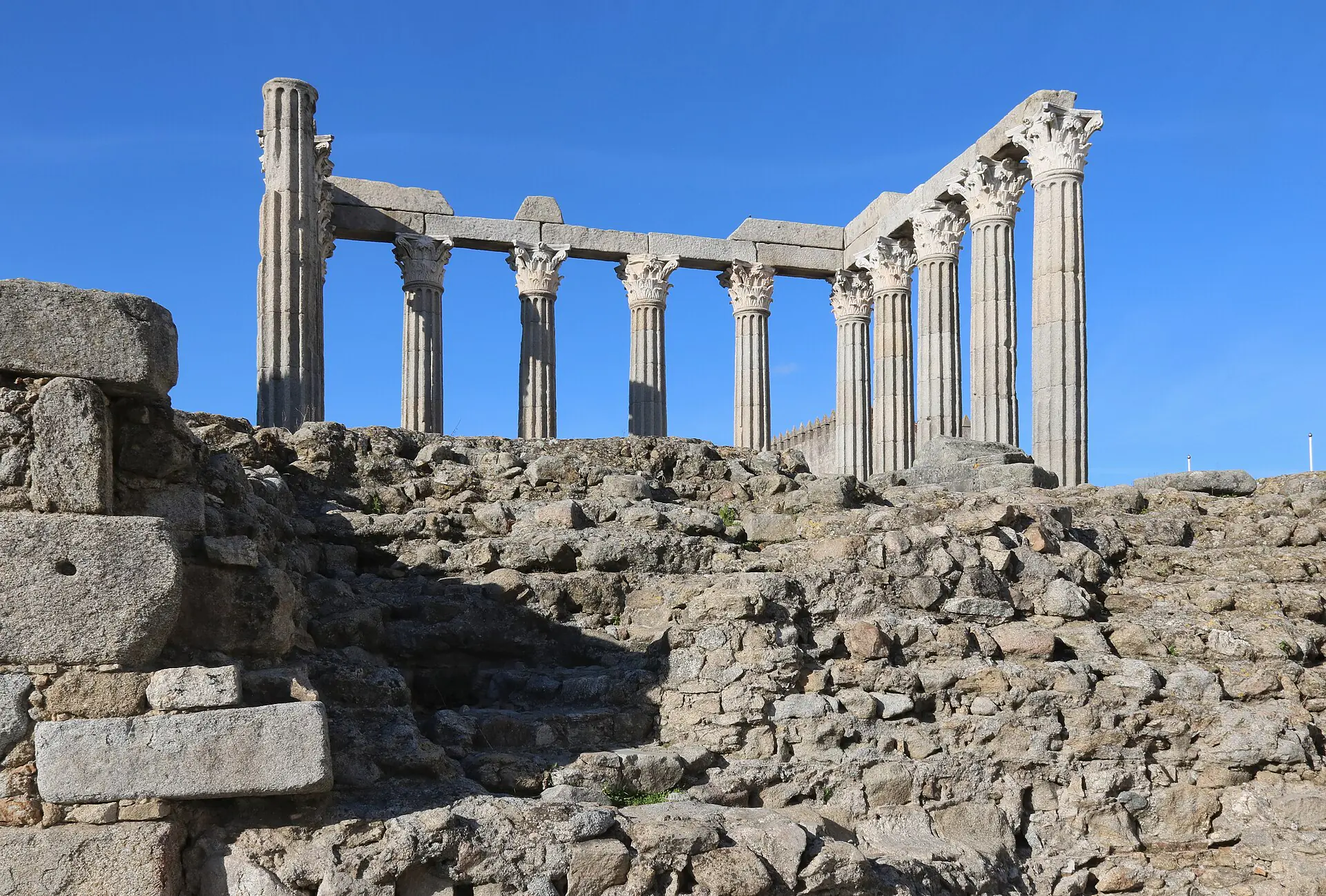
- The Roman temple — fluted Corinthian columns on their podium, misnamed ‘of Diana’ by tradition — stands in the upper town’s square, floodlit at night and casually two thousand years old.
- The cathedral’s rooftop walk is the town’s best ticket: over the granite domes and battlements with the Alentejo’s cork-and-olive sea in every direction.
- The Praça do Giraldo’s arcades, the old university’s azulejo classrooms, and the aqueduct with houses built into its arches fill the circuit between the headliners.
- Alentejo lunch is the day’s second monument: black-pork dishes, migas, and the region’s wines at prices Lisbon forgot — long, unhurried, and correctly timed against the afternoon heat.

Getting there
Sete Rios’ coach platforms run the Évora corridor all day; ninety minutes of motorway and cork oaks later, the terminal sits a ten-minute walk from the walls. The train’s romance loses to the bus’s arithmetic on this route, per the alarm — save the rails for the coast. Book the return with the outbound on summer Sundays. Drivers gain the Almendres Cromlech option (megaliths in the cork groves, twenty minutes west, unreachable by transit) at the cost of the wine at lunch — the region’s standing trade-off.
The day
Enter at the Giraldo square and climb to the temple first while the light is kind, cathedral rooftop straight after — the two-monument opening gives the town its shape in an hour. São Francisco and the Chapel of Bones come next, taken at the pace the alarm ordered: the room is small, the arrangement deliberate, and the inscription does its work on everyone. Then the long Alentejo lunch as both pleasure and heat strategy. The afternoon shades through the university’s tiled halls, the aqueduct walk, and the cork-and-crafts shops (cork purses to cork postcards — the region’s material doing everything). The evening coach rolls back through the groves with the light going amber, which is the Alentejo’s signature effect.
When to go
March to June and September to November run ideal; July–August posts interior-Portugal heat that reorganizes the day around shade and the alarm’s before-two rule — the monuments stay open, the streets empty till evening. Winter is mild, quiet, and occasionally misty-mystical around the temple. The São João fair in late June brings the town’s own festival week. Year-round, the bones don’t mind the weather, and the lunch argument holds daily.
Frequently Asked Questions
Is the Chapel of Bones disrespectful to visit?
It was built to be visited — a Franciscan memento mori intended to put mortality in front of the living, and it remains consecrated ground treated seriously. Visit as the monks intended: quietly, and letting the inscription frame it. Photography is permitted; behavior does the respecting.
Whose bones are they?
Some five thousand people relocated from the town’s overflowing medieval cemeteries — ordinary Évora across centuries, not battle dead or plague pits specifically. The monks’ point was universality, which the anonymity serves.
Évora or Sintra with one Lisbon day trip?
Different planets: Sintra for romantic palaces and crowds (documented on this network with its booking rules), Évora for Roman-to-monastic depth and Alentejo calm. Sintra photographs better; Évora converses better. Heat splits them seasonally — Sintra’s hills cool, Évora bakes.
Can I see the megaliths without a car?
Practically no — the Almendres Cromlech sits down dirt tracks in the cork groves, served by taxis-by-arrangement and tours. Drivers should go: ninety-plus standing stones older than Stonehenge, usually shared with nobody but sheep.
What should I eat?
Porco preto (acorn-fed black pork) in any form, migas alongside, Alentejo reds with everything, and queijadas or the convent sweets after — this is one of Portugal’s great food regions wearing work clothes. The tascas off the main square out-cook the square’s terraces at half the bill.